“`html
The Quick Miso Soy Salmon Sashimi Bowl Recipe is one of those unforgettable dishes that effortlessly combines simplicity and sophistication. This bowl brings together fresh, buttery sushi-grade salmon with a vibrant miso soy dressing that dazzles your taste buds from the very first bite. Whether you’re craving a light lunch or an impressive dinner that’s ready in minutes, this recipe balances the rich umami of miso and soy with the crisp freshness of cucumber and chives. You’re not just making a meal—you’re crafting an experience that feels restaurant-quality but comes together in your own kitchen with ease and joy.
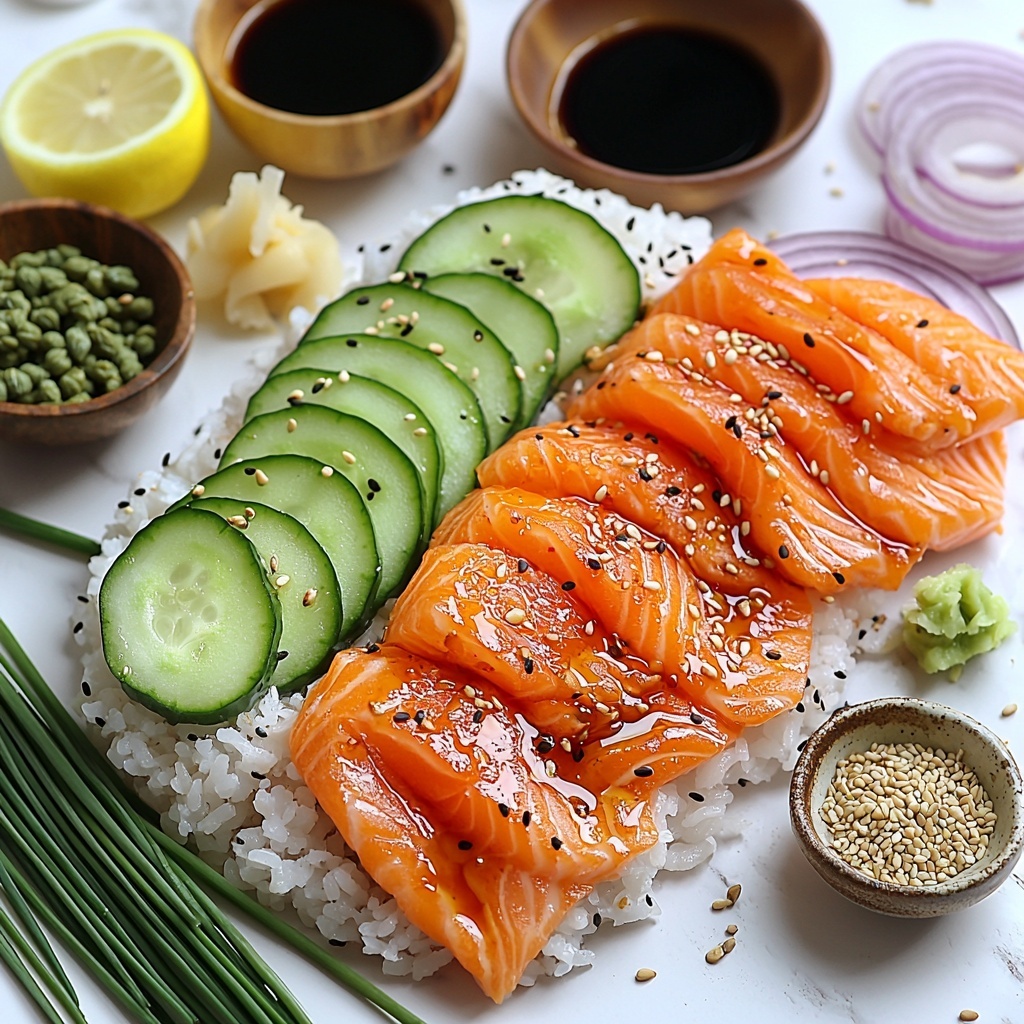
Ingredients You’ll Need
The beauty of this recipe lies in its handful of essential ingredients, each adding unique layers to your bowl. From the creamy texture of salmon to the zing of lemon and the nuttiness of sesame, every element plays a crucial role in balancing flavors and textures.
- 8 ounces Sushi-Grade Salmon: Always ensure you use sushi-grade for safety in raw dishes and the best silky texture.
- 1 tablespoon Capers: Adds a salty, tangy burst that cuts through the richness of the salmon.
- 1/4 medium Red Onion: Gives a subtle crunch and mild sharpness; green onions make a nice, milder substitute.
- 1 medium Cucumber: Brings refreshing crispness, and a firm variety holds up best in the bowl.
- 1 tablespoon Sesame Seeds: Toasted for a hint of warmth and crunch; poppy seeds can offer a playful twist.
- 1 tablespoon Chives: Provides light herbal notes that brighten the overall bowl; parsley can be a fresh alternative.
- 2 tablespoons Olive Oil: Use extra-virgin for a fruity, rich base in your dressing.
- 1 teaspoon Sesame Oil: Optional but highly recommended for its deep, nutty aroma that complements salmon.
- 2 tablespoons Soy Sauce: Use tamari to keep it gluten-free and contribute that essential umami backbone.
- 2 tablespoons White Miso: Offers a gentle, slightly sweet miso flavor; red miso works well if you prefer a stronger taste.
- 1 tablespoon Lemon Juice: Adds bright acidity to keep flavors lively; lime juice works beautifully too.
- 1 teaspoon Brown Sugar: Balances salty and sour notes with a hint of warm sweetness; honey can be swapped for a natural touch.
- To taste Flaky Salt: Enhances all the flavors while providing delicate texture.
- To taste Black Pepper: Freshly cracked for a subtle kick that wakes up your palate.
- 1 cup Sushi Rice (optional): Creates a heartier meal if you want something more filling beneath the sashimi.
How to Make Quick Miso Soy Salmon Sashimi Bowl Recipe
Step 1: Prepare the Dressing
Begin by whisking together the olive oil, sesame oil, soy sauce, white miso, lemon juice, and brown sugar in a small bowl. This dressing is the heart of the dish, marrying savory, sweet, and tangy elements into a silky sauce that will coat your salmon and veggies beautifully.
Step 2: Slice the Salmon
Using a very sharp knife, slice your sushi-grade salmon against the grain into thin, delicate pieces. Thin slicing ensures a melt-in-your-mouth texture and showcases the salmon’s natural richness and buttery quality.
Step 3: Arrange Your Bowl
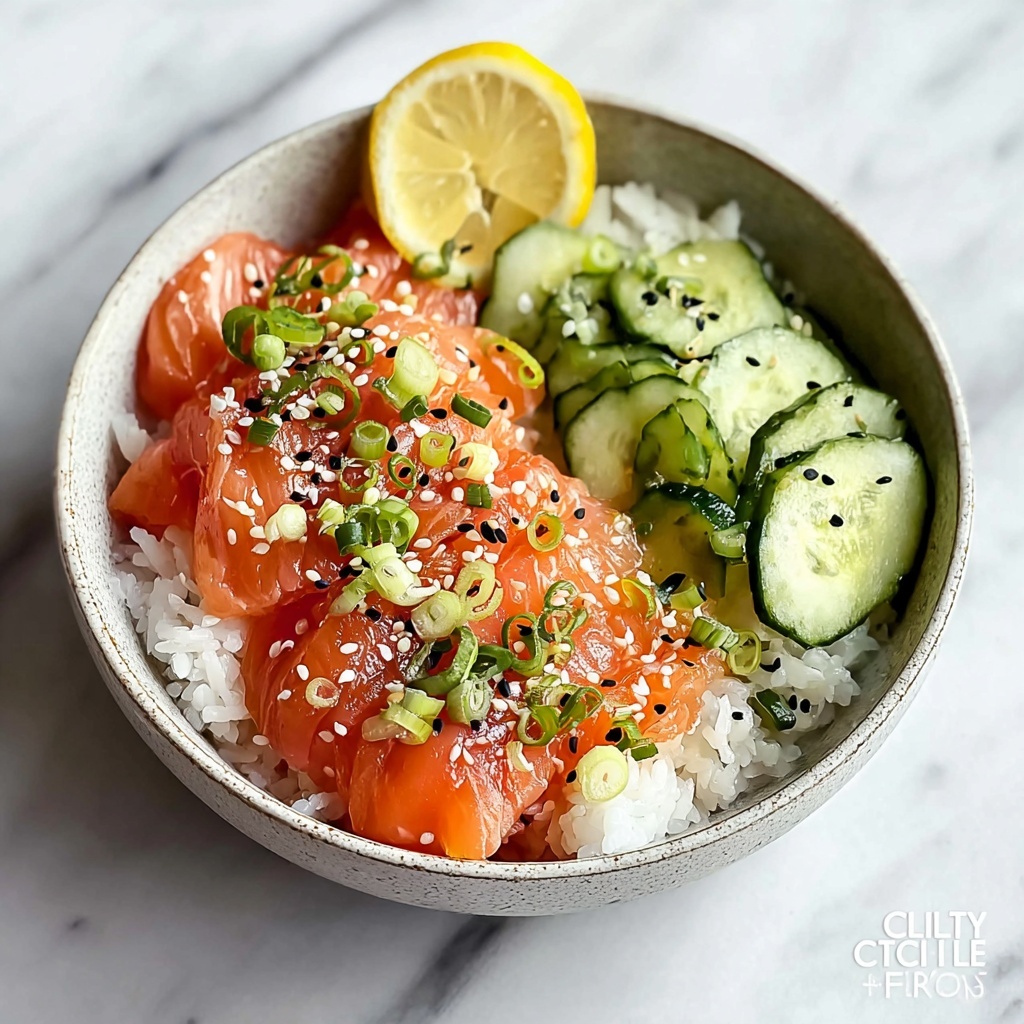
On a beautiful serving dish or bowl, lay out the salmon slices with gentle overlap for a visually stunning presentation. Add your thin cucumber slices and scatter red onion evenly over the top. This layering creates delightful contrasts in texture and flavor in every bite.
Step 4: Finish with Dressings and Seasonings
Drizzle the homemade miso soy dressing over the salmon and vegetables generously but thoughtfully. Follow with a light sprinkling of sesame seeds, chives, flaky salt, and black pepper to add crunch, freshness, and seasoning depth.
Step 5: Garnish and Serve
Top off your bowl with capers to add that unexpected pop of briny zest. Serve immediately to enjoy the freshness of the ingredients, or place over a bed of warm sushi rice for a more filling option.
How to Serve Quick Miso Soy Salmon Sashimi Bowl Recipe
Garnishes
Garnishes make a huge difference in both the look and taste of your Quick Miso Soy Salmon Sashimi Bowl Recipe. Capers add a sharp punch, fresh chives bring herbaceous brightness, and sesame seeds offer a final nutty crunch. Don’t skip these little finishing touches—they elevate every bite but also create a feast for the eyes.
Side Dishes
To complement this sashimi bowl, keep your side dishes light. A simple seaweed salad or edamame beans seasoned with sea salt pairs beautifully. You can also serve pickled ginger to refresh your palate between bites, or even a small bowl of miso soup to warm you up on cooler days.
Creative Ways to Present
Presentation is where you can really have fun with the Quick Miso Soy Salmon Sashimi Bowl Recipe. Try layering the ingredients in a clear glass bowl for a stunning layered effect. You can also serve salmon slices individually on cucumber rounds as bite-sized appetizers or arrange the bowl with edible flowers and microgreens for a restaurant-worthy touch.
Make Ahead and Storage
Storing Leftovers
If you have any leftovers from your Quick Miso Soy Salmon Sashimi Bowl Recipe, keep the salmon separate from any rice to maintain the freshest texture. Store the salmon and dressing in an airtight container in the fridge and aim to consume within 24 hours for best quality and safety.
Freezing
Freezing raw sushi-grade salmon sashimi is not recommended as it can negatively affect the texture and freshness critical to this dish. However, you can freeze the miso soy dressing in a small container and thaw it when ready to use, ensuring your preparation stays convenient and quick.
Reheating
This dish shines best served fresh and cold, so reheating is not suggested. If you included sushi rice as a base, you can gently warm the rice separately in the microwave or on the stove, then add the salmon and dressing cold when serving.
FAQs
Can I use other fish instead of salmon?
Absolutely! Tuna and yellowtail are excellent alternatives that work well with miso soy flavors. Just be sure they’re sushi-grade to enjoy the sashimi safely and deliciously.
Is there a gluten-free option for this recipe?
Yes, simply swap regular soy sauce with tamari, which is gluten-free, to keep all the umami without compromising dietary needs.
How long does this dish take to prepare?
This recipe is wonderfully quick, coming together in about 15 minutes from start to finish, making it perfect for busy weeknights or last-minute entertaining.
Can I make this recipe vegan or vegetarian?
While the Quick Miso Soy Salmon Sashimi Bowl Recipe relies on salmon, you can create a vegan version with marinated tofu or thinly sliced avocado, paired with the miso soy dressing for a satisfying alternative.
What is the best way to slice salmon for sashimi bowls?
Use a very sharp knife and slice the salmon thinly against the grain. This technique ensures tenderness and maximum flavor with every bite.
Final Thoughts
This Quick Miso Soy Salmon Sashimi Bowl Recipe is a true celebration of fresh ingredients and bold flavors that come together effortlessly. It’s perfect for anyone who loves the richness of salmon balanced by vibrant, tangy, and nutty accents. Give it a try—you’ll find this bowl becoming a much-loved staple in your kitchen, ready whenever you crave something quick, beautiful, and totally satisfying.
“`
Print
Quick Miso Soy Salmon Sashimi Bowl Recipe
- Prep Time: 10 minutes
- Cook Time: 0 minutes
- Total Time: 15 minutes
- Yield: 2 servings
- Category: Sashimi Bowl
- Method: No-Cook
- Cuisine: Japanese
- Diet: Low Fat
Description
A quick and flavorful Miso Soy Salmon Sashimi Bowl featuring thinly sliced sushi-grade salmon drizzled with a savory miso dressing, complemented by fresh cucumber, red onion, and garnished with capers and sesame seeds. Perfect for a light, elegant meal ready in just 15 minutes.
Ingredients
Salmon and Garnishes
- 8 ounces Sushi-Grade Salmon (Always ensure you use sushi-grade for safety in raw dishes.)
- 1 tablespoon Capers
- 1/4 medium Red Onion (For a milder taste, swap with green onions.)
- 1 medium Cucumber (Choose any firm variety for the best results.)
- 1 tablespoon Sesame Seeds (Poppy seeds can be used for a twist.)
- 1 tablespoon Chives (Fresh herbs like parsley can work instead.)
- Flaky Salt, to taste
- Black Pepper, to taste
Dressing
- 2 tablespoons Olive Oil (Opt for extra-virgin for the best flavor.)
- 1 teaspoon Sesame Oil (Optional, adds a nutty aroma.)
- 2 tablespoons Soy Sauce (Use tamari for gluten-free option.)
- 2 tablespoons White Miso (Red miso can be a great substitute.)
- 1 tablespoon Lemon Juice (Lime juice can also serve as an alternative.)
- 1 teaspoon Brown Sugar (Honey can be used for a warmer sweetness.)
Optional
- 1 cup Sushi Rice (Optional base for a heartier meal.)
Instructions
- Preparation: Gather all ingredients and have a sharp knife ready for slicing the salmon thinly.
- Make the Dressing: In a small bowl, combine olive oil, sesame oil, soy sauce, white miso, lemon juice, and brown sugar. Whisk vigorously until the mixture is smooth and well emulsified, creating a flavorful miso dressing.
- Slice the Salmon: Using a sharp knife, carefully slice the sushi-grade salmon against the grain into very thin slices to maximize tenderness and presentation.
- Assemble the Bowl: In a serving bowl, artfully arrange the salmon slices, slightly overlapping them. Add thinly sliced cucumber and finely chopped red onion around the salmon. Sprinkle sesame seeds and chopped chives evenly over the top.
- Dress and Season: Drizzle the freshly made miso dressing generously over the salmon and vegetables. Season the bowl with flaky salt and freshly ground black pepper to taste.
- Garnish and Serve: Finish the bowl by garnishing with capers for a briny contrast. Serve immediately as is or over a bed of sushi rice if desired for a more filling meal.
Notes
- Ensure the salmon is labeled sushi-grade to safely enjoy raw fish.
- For a gluten-free dish, substitute soy sauce with tamari.
- Use extra-virgin olive oil and fresh ingredients for the best flavor.
- Adjust brown sugar or honey to your preferred sweetness level in the dressing.
- This dish is best consumed immediately for maximum freshness and texture.
- Can be served with sushi rice to make it more substantial.